Laser Therapy For Pain: How It Works and What To Expect
When pain keeps coming back, it’s natural to start looking beyond temporary relief. Maybe stretching helps for a while. Maybe you’ve tried medication, massage, or chiropractic care, but the discomfort keeps returning. At some point, you may start wondering whether laser therapy for pain could help.
Laser therapy is a gentle, non-invasive treatment that uses targeted light energy to support healing at the cellular level. Rather than relying on medication, needles, or surgery, it works by supporting cellular activity, circulation, and the body’s natural repair process.
If you’re researching the specific laser treatment available at Oviedo Chiropractic, you can learn more about ReliefNow™ Laser Therapy here.
What Is Laser Therapy for Pain?
Laser therapy is a form of light-based treatment that supports the body’s natural healing process. It works by delivering concentrated light energy, typically in the red or near-infrared spectrum, directly to injured or inflamed tissues.
Your cells absorb this light and respond in several ways. Most notably, they begin producing more adenosine triphosphate (ATP), which is the energy source cells use to function and repair themselves.
Laser therapy can also support circulation, help reduce inflammation, and stimulate tissue repair. Together, these effects can create a better environment for recovery while helping address pain.
“[High intensity laser therapy] gets deep in there… basically exciting the cells. So we are recharging them, and they can work better.”
We Offer Same-Day Appointments
Types of Laser Therapy
Not every therapeutic laser works the same way.
Laser devices are classified into four categories, Class I through Class IV, based on their power and potential to interact with tissue. In general, higher-class lasers deliver more energy and can reach deeper beneath the skin.
Class I and II Lasers
Class I and Class II devices are very low powered. Familiar examples include barcode scanners and laser pointers.
They do not penetrate deeply and are not typically used for therapeutic purposes.
Class III: Low-Level Laser Therapy
Class III lasers are commonly associated with low-level laser therapy, or LLLT.
These lasers produce cool, non-thermal light. They may offer therapeutic benefits for more superficial tissues, including skin or shallow joints, but their energy reaches only about 2 inches deep and has limited strength at that depth.
Class IV: High-Intensity Laser Therapy
Class IV lasers are more powerful therapeutic devices. They can penetrate up to approximately 4 inches beneath the skin, allowing light energy to reach muscles, ligaments, and other deeper soft tissues.
High-intensity laser therapy can also create a gentle warming sensation during treatment. That warmth accompanies the delivery of energy used to support circulation, inflammation reduction, and tissue repair at a deeper level.
Learn more about high-intensity laser therapy.
The main difference is not simply whether one laser is “stronger” than another. The depth and amount of energy delivered can affect which tissues the treatment is capable of reaching.

Does Laser Therapy Work for Pain?
It can sound almost too simple: shine light on an area that hurts and expect something to happen beneath the skin.
But laser therapy has been studied for its effects on pain, movement, inflammation, and musculoskeletal conditions. Studies of high-intensity laser therapy have found improvements in pain reduction and range of motion, particularly for people with musculoskeletal conditions, nerve pain, and soft tissue injuries.
Part of the reason laser therapy may help with pain is that it supports several processes involved in recovery at the same time.
It may help by:
- Reducing inflammation: Laser light helps regulate inflammatory chemicals in the body, which may ease swelling and pressure around nerves and joints.
- Improving circulation: Increased blood flow helps bring oxygen and nutrients to damaged tissues.
- Supporting tissue repair: By helping cells produce more ATP, laser therapy supports the recovery process in muscles, tendons, ligaments, and other tissues.
- Reducing muscle tension and spasms: Some patients experience less tightness and muscle spasm, particularly around areas such as the back, neck, and shoulders.
- Supporting nerve-related conditions: Laser therapy may also be incorporated into care for certain repetitive-stress and nerve-related problems, including carpal tunnel syndrome.
Laser therapy may be considered for chronic pain, inflammation-related conditions, soft tissue injuries, muscle tightness, repetitive-stress problems, and some forms of nerve-related discomfort. It may also be used when irritated muscles, tendons, or ligaments need additional support during recovery.
That does not mean every type of pain will respond the same way.

Pain can come from muscles, joints, tendons, ligaments, nerves, discs, or a combination of structures. Someone with a soft tissue injury may need a very different treatment plan from someone whose pain is primarily related to nerve compression.
Results can also vary depending on the severity and duration of the condition and how the individual responds to treatment.
When laser therapy is appropriate for the patient, it may help:
- Improve mobility
- Reduce flare-ups
- Support longer-term pain management
- Make everyday movement more comfortable
The goal is not simply to mask pain temporarily. Laser therapy is intended to support the biological processes involved in recovery while helping reduce irritation and discomfort.
Laser Therapy for Pain: What to Expect
Laser therapy treatments are typically straightforward and do not require medication, needles, or incisions.
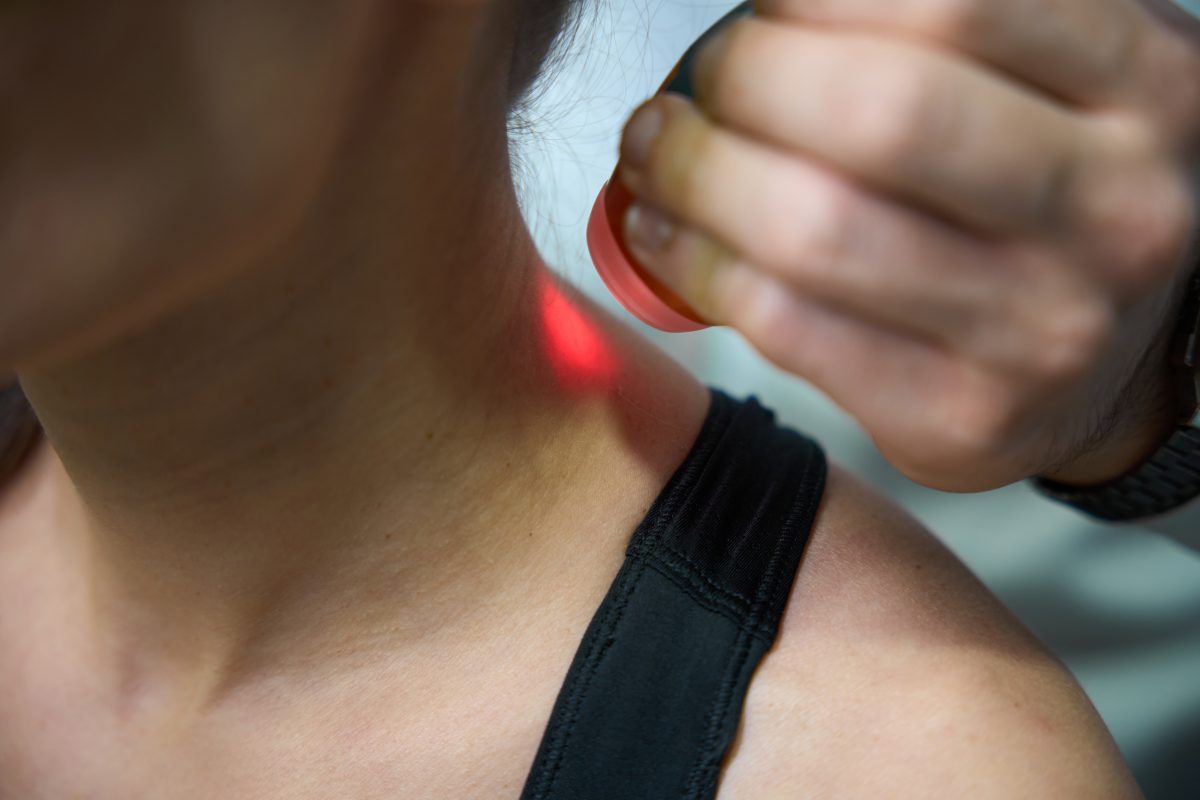
During a session, your provider moves a handheld device, sometimes described as a “laser wand,” over the affected area. With a Class IV laser, a focused beam of light delivers energy into the tissues being treated.
Does Laser Therapy Hurt?
Laser therapy is non-invasive and generally well tolerated.
Low-level lasers may create very little noticeable sensation. With higher-intensity therapeutic lasers, patients will typically feel warmth over the treatment area.
Many describe the sensation as pleasantly warm, similar to a hot stone massage. Treatment should remain comfortable while the laser delivers energy to the targeted tissues.
In rare cases, mild redness or sensitivity may occur in the treated area, but these effects are generally short-lived.
Because treatment does not involve needles or incisions, there is no required downtime afterward.
How Long Does a Laser Therapy Session Last?
Most laser therapy sessions last only a few minutes, depending on the area being treated.
Afterward, you can generally return to your normal routine without restrictions.
Your provider may recommend more frequent sessions at the beginning of care, particularly when the tissues have been under chronic stress. Laser therapy is typically used consistently rather than as a one-time treatment, and response can develop gradually.
“It’s like planting a seed in the ground, and then you have to keep watering it to see the flowers.”
As your body responds, visits may be spaced farther apart or shifted into maintenance care.
There is no single treatment schedule that applies to everyone. The frequency of care should depend on your condition, symptoms, goals, and response to treatment.
Not sure whether laser therapy makes sense for your pain? An evaluation can help identify what may be contributing to your symptoms and whether laser therapy or another conservative treatment belongs in your care plan.

How Laser Therapy Can Fit With Other Treatments
Laser therapy does not necessarily need to be used by itself.
Depending on the cause of your pain, it may be incorporated into a broader conservative treatment plan alongside chiropractic care, soft tissue therapy, rehabilitation, or other approaches.
For example, laser therapy can be paired with spinal decompression therapy when the goal is to support tissue recovery while also addressing pressure and spinal mechanics.
These treatments address different parts of the problem. Spinal decompression is designed to reduce pressure and improve disc mechanics, while laser therapy supports cellular activity, circulation, and tissue recovery.
That does not mean the combination is appropriate for everyone.
The right approach depends on what is contributing to your symptoms. An evaluation can help determine whether your pain is primarily coming from a muscle, tendon, joint, disc, nerve, or another structure before deciding which treatment options make sense.
Is Laser Therapy Right for Your Pain?
If you have been dealing with persistent pain despite stretching, medication, massage, or other forms of care, laser therapy may be worth discussing with a healthcare provider.
But experiencing pain alone does not automatically make someone a candidate for laser therapy.
Your symptoms, the underlying cause of the pain, how long the problem has been present, your treatment history, and how your body responds to care can all influence whether laser therapy belongs in your treatment plan.
That is why evaluation matters.
During an evaluation, your provider can review your symptoms and treatment history, perform an examination, and use imaging when medically necessary to better understand what may be contributing to the pain. From there, they can determine whether laser therapy is appropriate or whether another conservative treatment may make more sense.
Booking an evaluation does not mean you are committing to laser therapy. The goal is to understand the problem first and then choose treatment based on what the examination shows.
Take the Next Step Toward Feeling Better
Persistent pain can make everyday activities harder than they need to be. If the same discomfort keeps returning, laser therapy may provide another conservative, non-invasive option to consider as part of your care.
By using targeted light energy, laser therapy can support cellular activity, circulation, inflammation reduction, and tissue repair. For the right patient, it may be one part of a broader plan designed to improve movement and help manage pain more effectively.
If you’re in Oviedo, Winter Springs, East Orlando, or the surrounding area, schedule an evaluation with Oviedo Chiropractic to find out what may be causing your pain and whether laser therapy belongs in your treatment plan. Same-day appointments are often available, and you can book online or call 407-542-1614 to get started.