
Can a Chiropractor Help a Herniated Disc?

Neck and back pain can start out as something mild and annoying, then slowly turn into pain that affects almost everything you do. Sitting becomes uncomfortable. Driving hurts. Sleeping gets harder. Sometimes the pain does not even stay in your back or neck anymore. It starts traveling into your arm, glute, or leg.
That is usually when people start wondering if they might have a herniated disc.
If you have been diagnosed with one, or suspect you might have one, it is normal to ask whether chiropractic care can help. Most people are not looking for complicated medical terminology. They just want to know why they are hurting and what their options are before jumping straight to injections or surgery.
Herniated discs are also a common car accident injury, though they can also develop from repetitive stress, poor posture, aging, or sudden strain.
At Oviedo Chiropractic, the focus is not on “fixing” a disc overnight. The goal is to identify what may be irritating the nerves or stressing the spine, then build a treatment plan that helps improve movement, reduce pressure, and support recovery.
What Is a Herniated Disc?
Between each vertebra in your spine is a disc that acts like a cushion and shock absorber. These discs help the spine move properly while also absorbing force from daily activities like walking, bending, lifting, and twisting.
Each disc has a softer inner material surrounded by a stronger outer layer.
You have probably heard terms like slipped disc, bulging disc, disc protrusion, or herniated disc. People often use these terms interchangeably, but they are not exactly the same thing.
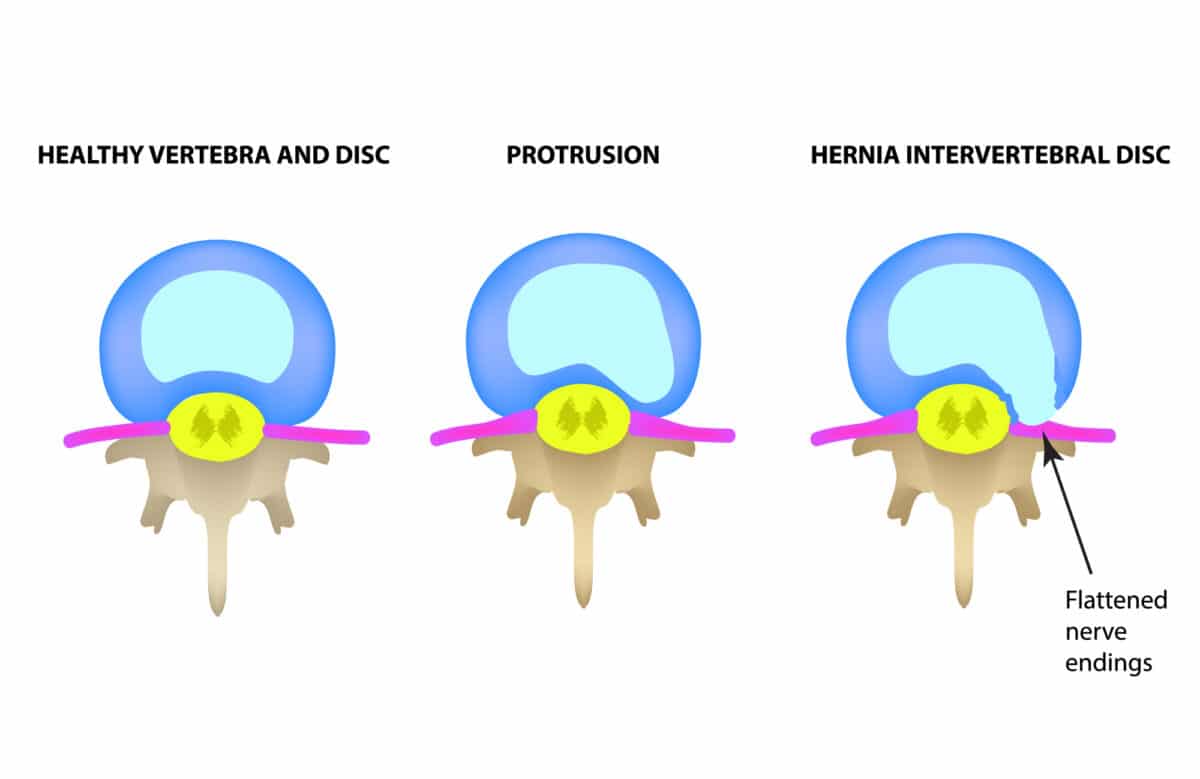
One important thing to understand is that a “slipped disc” is not literally sliding around in your spine. What usually happens is the softer inner disc material starts pressing outward against the outer layer of the disc. If enough pressure builds up, the outer layer can weaken or tear, allowing some of that inner material to push outward and irritate nearby nerves.
That nerve irritation is often what causes symptoms. If the outer layer has not fully torn, it may be described as a bulging disc. If the outer layer ruptures, it is usually considered a true disc herniation.
We Offer Same-Day Appointments
Signs a Disc May Be Irritating a Nerve
Not every case of back pain is caused by a herniated disc. Muscle strain, joint irritation, arthritis, and posture problems can all create similar discomfort.
But certain symptoms tend to raise more concern for disc or nerve involvement, especially when pain travels away from the spine.
- Burning pain into the arm or leg
- Tingling or numbness
- Pain into the glutes or thigh
- Weakness in the arms or legs
- Sharp pain with bending or sitting
- Symptoms that worsen with coughing, sneezing, or certain positions
For example, a herniated disc in the neck may create pain or tingling into the shoulder, arm, or hand. A lumbar disc issue may create symptoms that travel into the glutes, thigh, or leg, which is often associated with sciatica.
This is why pain is not always felt exactly where the problem starts. A compressed or irritated spinal nerve can send symptoms into another area of the body, which is known as referred pain.
How Do You Know If You Have a Herniated Disc?
One of the biggest misconceptions about herniated discs is that you can diagnose one based on symptoms alone.
The reality is that several conditions can mimic disc pain, which is why a proper evaluation matters. At Oviedo Chiropractic, the evaluation process may include orthopedic testing, neurological testing, reflex and strength testing, range of motion assessment, review of previous imaging, and in-house X-rays when medically necessary.
X-rays do not directly show a herniated disc, but they can help identify spinal alignment changes, joint degeneration, instability, or other structural issues that may be contributing to symptoms.
If symptoms suggest more significant disc or nerve involvement, additional imaging such as an MRI may be recommended. That is especially important when symptoms include progressing weakness, severe nerve pain, or ongoing numbness and tingling that is not improving.

What Causes a Herniated Disc?
Herniated discs usually develop from a combination of stress, repetitive strain, aging, posture changes, or injury.
Sometimes there is a clear event that triggers symptoms, like a car accident or lifting injury. Other times, the problem develops gradually over years of accumulated stress on the spine.
Common contributing factors include repetitive lifting, long periods of sitting, poor posture, sedentary lifestyle, previous injuries, smoking, aging-related degeneration, and repeated bending or twisting.
A 2021 study found higher rates of disc protrusion among younger adults with sedentary lifestyles, smoking history, and elevated body weight.
How Chiropractic Care May Help Herniated Disc Symptoms
Chiropractic care is not about forcing a disc back into place. Instead, treatment focuses on improving how the spine moves, reducing stress on irritated structures, and helping patients function more comfortably.
Your treatment plan depends on your exam findings, imaging when necessary, and how severe your symptoms are.
Chiropractic Adjustments
When appropriate, spinal adjustments may help improve joint motion and reduce abnormal stress on nearby areas of the spine. For some patients, improving movement in restricted joints can help reduce mechanical irritation and improve overall function.
Flexion-Distraction Therapy
Flexion-distraction therapy uses a specialized table to gently create movement and reduce pressure within the spine. This approach is commonly used in disc-related cases because it allows the spine to move in a controlled and gentle way.
Medical Massage Therapy
Muscles surrounding an irritated disc often tighten protectively. Medical massage therapy may help reduce muscle guarding, improve circulation, and make movement feel more comfortable.
Rehabilitation Exercises
Exercises are often included to help improve stability, posture, movement control, and overall spinal support. The goal is not just short-term symptom relief, but helping the body move better long term.
When Spinal Decompression May Be Considered
For some patients, spinal decompression therapy may be part of the treatment plan, especially when exam findings or imaging suggest the discs are putting pressure on nearby nerves.
At Oviedo Chiropractic, decompression candidacy may be based on orthopedic and neurological testing, X-ray measurements, MRI findings, and symptoms like numbness, tingling, burning pain, or weakness.
A common way to understand decompression is to think about the disc like a sponge. Discs do not have direct blood flow. Instead, they rely on movement and pressure changes to help move nutrients and fluid in and out of the disc.
During decompression, gentle stretching creates separation within the spine. This may help reduce pressure and create a vacuum effect that supports disc hydration and motion.
Not every patient is a candidate, though. That is why the evaluation comes first.
How ReliefNow™ Laser Therapy May Support Recovery
ReliefNow™ Laser Therapy may also be used as part of a conservative treatment plan for disc-related symptoms.
Laser therapy is designed to support cellular activity and circulation within irritated tissues. In some cases, it may help calm inflammation and support recovery around irritated nerves and soft tissues.
One important thing patients should understand is that laser therapy is not typically an instant result treatment. Some people notice changes relatively quickly, while others improve more gradually over multiple sessions. Chronic conditions often take longer than newer injuries.
Laser therapy is often combined with chiropractic care, rehabilitation exercises, or decompression depending on the patient’s condition.
Who May Not Be a Candidate for Conservative Care Alone
Not every patient with a herniated disc is automatically a candidate for decompression or certain chiropractic techniques.
Some situations may require modified treatment, additional imaging, or referral to another provider. That can include fractures, severe instability, progressive neurological loss, certain post-surgical conditions, or serious underlying medical concerns.
The goal is always to determine what is safest and most appropriate for the patient, not force every case into the same treatment approach.
When Imaging or Referral May Be Recommended
In some cases, additional imaging or referral may be necessary.
That may happen when symptoms continue worsening, weakness is progressing, conservative care is not helping, trauma or fracture is suspected, or severe nerve compression may be present.
Sometimes collaboration with orthopedic specialists or additional medical providers is appropriate depending on the findings. A good conservative provider should be willing to refer when needed, not delay appropriate care.
Frequently Asked Questions About Herniated Discs and Chiropractic Care
Can a chiropractor make a herniated disc worse?
A proper examination helps determine which treatments and techniques are appropriate. Care should always be based on the patient’s condition, symptoms, and tolerance level.
Is surgery always necessary for a herniated disc?
No. Many patients first explore conservative care options such as chiropractic treatment, rehabilitation, decompression, or physical therapy before surgery is considered. Surgery may still be appropriate in some cases, which is why evaluation and referral matter.
How long does it take to improve?
Recovery varies from person to person depending on the severity of the condition, how long symptoms have been present, and the type of treatment being used.
Can a herniated disc heal on its own?
Some disc injuries improve over time, especially when aggravating activities are reduced and conservative treatment is started early. Persistent symptoms should still be evaluated.
Get Evaluated for Herniated Disc Symptoms in Oviedo
If you are dealing with burning pain, numbness, tingling, weakness, or ongoing neck and back pain, it may be time to get evaluated instead of continuing to guess at the cause.
At Oviedo Chiropractic, treatment plans are based on your symptoms, examination findings, imaging when necessary, and your overall goals. Depending on your condition, treatment may include chiropractic care, decompression, laser therapy, massage therapy, or rehabilitation exercises.
If you are in Oviedo, Winter Springs, East Orlando, or the surrounding area, schedule an appointment with Oviedo Chiropractic to discuss your symptoms and conservative treatment options.