
Can Spinal Decompression Help Sciatica?

If you’ve already tried chiropractic adjustments for sciatica and you’re still dealing with pain, numbness, tingling, or weakness, it can feel like you’re running out of options. You may even be wondering whether surgery is the next step.
But persistent sciatica doesn’t always mean you’ve reached the end of conservative care. Spinal decompression in Oviedo, FL is another non-invasive treatment that may be considered when adjustments alone haven’t provided enough relief.
Whether decompression makes sense depends on what is causing your sciatica in the first place. Understanding that difference is the key to knowing what your next step should be.
What Causes Sciatica?
Sciatica isn’t a single condition with a single treatment. It’s a pattern of symptoms that develops when the nerves that travel from the lower spine into the leg become irritated or compressed. The important question is what’s causing that irritation.
For some people, the problem is the joints in the lower back. If a joint is misaligned or not moving properly, it may interfere with nearby nerves and contribute to irritation. For others, the pressure is coming from a spinal disc. The discs between your vertebrae act as cushions, but they can become compressed and bulge outward or herniate.
Before deciding which approach makes sense, your chiropractor needs to determine whether your symptoms are more closely related to joint mechanics, disc compression, or another source of nerve irritation.

We Offer Same-Day Appointments
What Does Sciatica Feel Like?
Sciatica doesn’t always feel like a simple backache. Because the symptoms follow an irritated nerve pathway, they can travel from the lower back or buttock into the thigh, calf, foot, or toes, known as “referred pain.” Some people feel a sharp or shooting pain, while others notice burning, tingling, numbness, or weakness.
These symptoms can offer an important clue about what’s happening in the lower spine.
“If a patient feels a burning sensation down the legs, glutes, or thigh, they could also experience some numbness, tingling, or weakness. Usually, that is a red flag that there is some disc or nerve involvement.”
– Dr. Edgar Rivera, DC
That doesn’t tell you exactly what’s causing the pressure, but it does signal that the nerve may be involved. The next step is figuring out why.
Diagnosing Sciatica
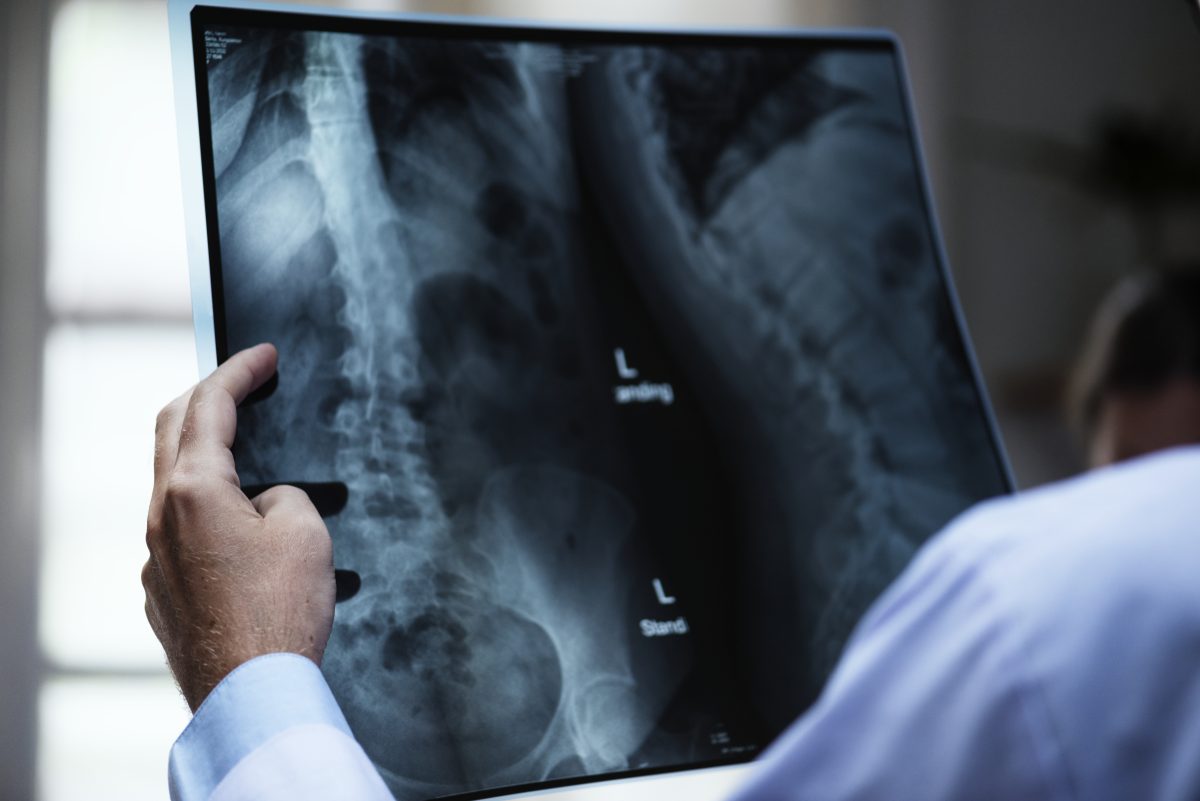
Sciatica symptoms can tell your chiropractor that a nerve is irritated, but they can’t reveal what’s causing the irritation. That’s why treatment shouldn’t begin with the assumption that every case of sciatica needs the same approach.
A chiropractic evaluation may include orthopedic and neurological testing to check strength, sensation, movement, and other signs of nerve involvement. Imaging can then help your chiropractor get a clearer picture of what’s happening in the lower spine, including changes in disc height or other structural findings that may be contributing to your symptoms.
If you already have recent imaging, such as an MRI, your chiropractor may be able to review it as part of the evaluation. If you don’t, Oviedo Chiropractic has in-house X-ray capabilities when imaging is medically appropriate.
“For sciatica, depending on the symptoms, first you want to take an X-ray. You want to try to measure how the disc height is, and depending how bad it is, is the type of treatment.”
– Dr. Edgar Rivera
The goal is to identify the most likely source of the pressure before deciding what to do about it. That’s especially important when determining whether continued adjustments make sense or whether another conservative treatment, such as spinal decompression, should be considered.
How Is Sciatica Treated?
At Oviedo Chiropractic, treatment for sciatica typically starts with chiropractic adjustments. The goal is to improve joint motion and positioning in the lower back so there’s less mechanical stress on the irritated nerve structures.
It’s important to give those adjustments time to work. When a joint has been sitting or moving in a misaligned position, the surrounding muscles and other soft tissues can adapt to that pattern. At first, those tissues may naturally pull the joint back toward the position they’ve become accustomed to. That’s one reason chiropractic care often takes a series of adjustments rather than a single visit.
As treatment continues, your chiropractor will watch for changes in your pain, mobility, numbness, tingling, weakness, and other symptoms. If you’re improving, adjustments may remain the primary treatment.
If you aren’t making enough progress, however, that’s when the treatment plan may change. Depending on what your exam and imaging show, your chiropractor may recommend adding spinal decompression to address factors that adjustments alone may not be resolving.
Spinal Decompression For Sciatica
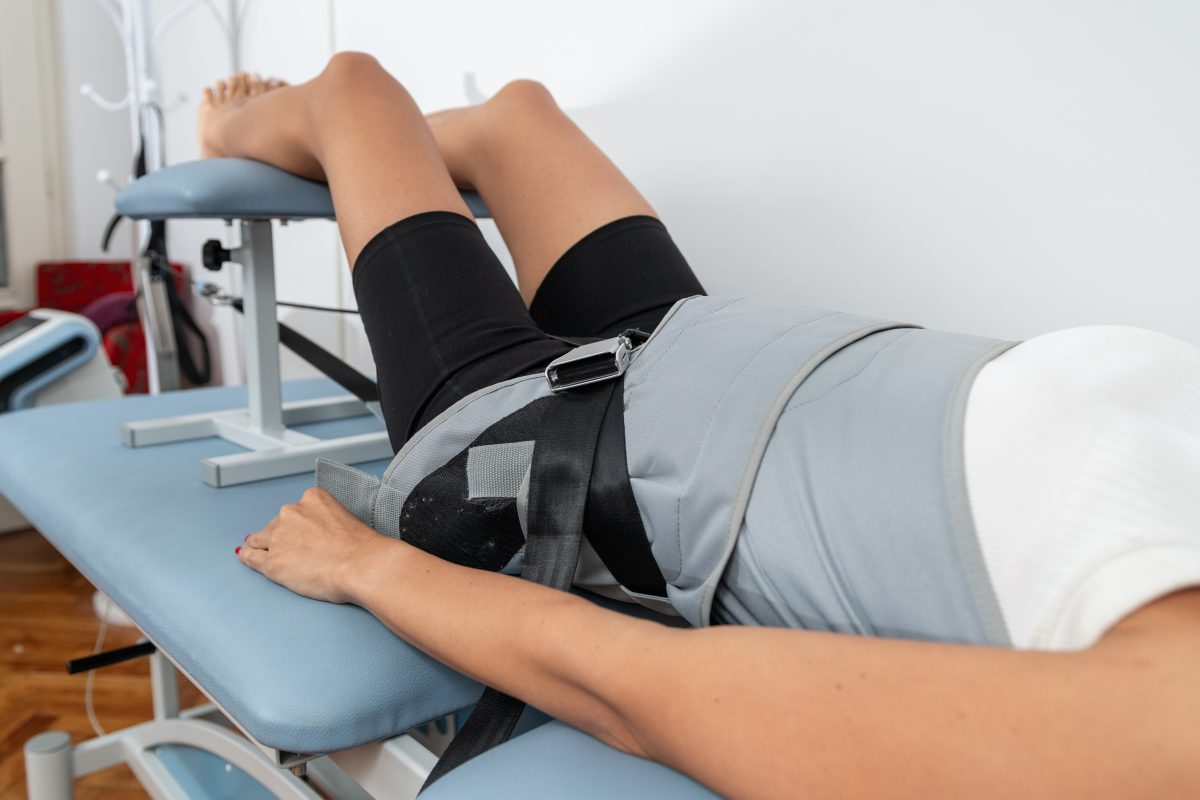
If your sciatica isn’t improving with adjustments alone, your chiropractor may look more closely at whether spinal decompression is a logical next step.
Spinal decompression machines work by gently creating more space between the vertebrae. This can help reduce pressure on the affected area and improve the way the disc is able to move and absorb fluid.
“A patient would be a candidate for spinal decompression if we have positive testing with orthopedic and neurological testing, as well as positive compression based on measurements from the X-rays. Or if a patient has a previous MRI that they bring in, we can actually see the discs and identify what disc is causing the compression.”
– Dr. Justin Cough, DC
For patients who haven’t gotten enough relief from adjustments alone, it can provide another conservative way to address the source of their symptoms and support a gradual return to more comfortable movement.
Your chiropractor may also consider laser therapy alongside decompression. Laser therapy can support circulation and cellular activity in irritated tissues, making it a useful complement in some cases.
For some patients, this gives them another non-invasive option to explore before more invasive treatment, such as spinal decompression surgery. If your condition does require a higher level of care, your chiropractor can recommend referral to an orthopedic specialist or neurosurgeon.
Find Out What’s Causing Your Sciatica
If you’ve been treating sciatica but still aren’t getting the relief you’re looking for, the next step isn’t necessarily to keep repeating the same approach. It may be time to take another look at what’s causing the nerve irritation and whether a different conservative treatment makes sense.
At Oviedo Chiropractic, we evaluate your symptoms, movement, neurological findings, and imaging when appropriate to determine what may be contributing to your sciatica. If disc compression is involved, spinal decompression may be one of the treatment options we consider.
If you’re in Oviedo, Winter Springs, or the surrounding East Orlando area, schedule an evaluation to find out what your next step could look like. Same-day treatment is often available after your exam when appropriate, and Saturday appointments are available for added convenience.